
What Are AI Horizons Future Trends and Why They Matter for Agencies
Imagine this: it’s the end of the quarter, and your team is buried under a mountain of campaign reports, client revisions, and pitches for new business. The pressure is immense. In today’s fast-paced market, especially here in Lebanon, agencies are constantly battling tight deadlines and ever-increasing client expectations. It feels like you’re always playing catch-up. This is where understanding AI horizons future trends becomes less of a futuristic luxury and more of a present-day necessity. These aren’t just abstract tech concepts; they are powerful tools that represent the next evolution in agency operations, client services, and overall growth.
So, what exactly are we talking about? AI horizons future trends refer to the cutting-edge developments in artificial intelligence that are poised to reshape industries. Think beyond simple chatbots or automated emails. We’re talking about AI that can create, reason, and operate with unprecedented speed and privacy. For an agency, mastering these trends is the key to unlocking new levels of efficiency, delivering groundbreaking work for clients, and achieving a significant AI strategic impact. This article is your guide to navigating the future of AI, providing actionable insights to transform your agency from a service provider into an indispensable, tech-forward partner.
Key AI Horizons Future Trends Every Agency Must Master
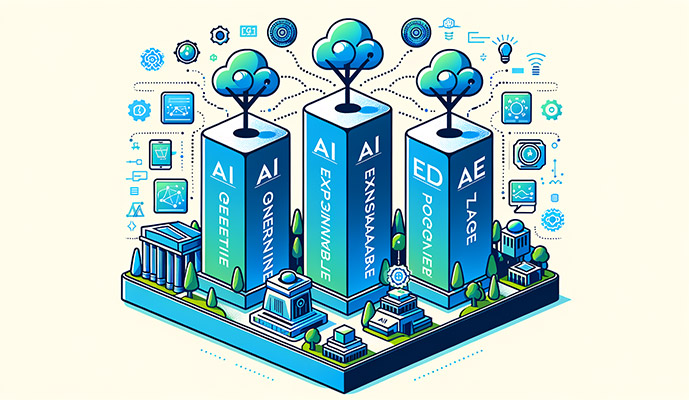
Navigating the complex landscape of AI can feel overwhelming, but the reality is that a few key trends are driving the most significant changes. Focusing on these core areas allows an agency to make strategic investments that yield the highest returns. The three pillars that will define the next era of agency excellence are generative AI, explainable AI, and edge AI. According to recent market analysis, businesses that are early adopters of these integrated AI technologies report up to a 50% increase in ROI within the first two years. That’s not just a number; it’s a competitive chasm. Imagine reducing campaign timelines by 80%—a game-changer for meeting client deadlines and boosting profitability. Let’s break down what these trends mean in practice.
Generative AI
At its core, generative AI is a type of artificial intelligence that can create new, original content—from text and images to music and code. For agencies, this is revolutionary. It’s like having a tireless, infinitely creative junior team member on call 24/7. Think about the possibilities for campaign automation: generating dozens of ad copy variations for A/B testing in minutes, creating unique visual assets for social media, or drafting initial blog posts and press releases. A recent study by McKinsey highlights that generative AI could automate up to 70% of tasks across business functions, freeing up human talent to focus on high-level strategy and client relationships. This isn’t about replacing creativity; it’s about augmenting it with speed and scale, allowing your team to deliver more innovative work, faster.
Explainable AI
As AI becomes more integrated into decision-making, a critical question arises: “How did the AI arrive at this conclusion?” Explainable AI (XAI) is the answer. It’s a set of processes and methods that allows human users to understand and trust the results and output created by machine learning algorithms. For agencies, AI transparency is paramount for building and maintaining client trust. When you recommend a specific audience segment or ad spend allocation based on an AI model, your client needs to know *why*. Implementing ethical AI practices, such as conducting regular AI audits and having multidisciplinary teams review algorithmic outputs, helps mitigate bias and ensures accountability. XAI transforms AI from a “black box” into a transparent, trustworthy partner in strategy.
Edge AI
Traditionally, AI processing happens in the cloud, which involves sending data to a centralized server. Edge AI flips this model on its head. It runs algorithms locally on a device, like a smartphone or an in-store sensor, without needing a constant internet connection. The primary benefits for agencies and their clients are twofold: speed and privacy. Because data doesn’t have to travel to the cloud and back, low-latency AI applications become possible, enabling real-time interactions. For example, a retail client could use edge AI to power smart mirrors that offer personalized style recommendations instantly. Furthermore, since sensitive user data is processed on the device itself, it enhances privacy and security—a major selling point in a data-conscious world. Understanding edge AI applications opens up a new frontier of interactive and secure client solutions.
Industry-Specific Applications of AI Horizons Future Trends

The true power of these AI trends is realized when they are applied to solve specific industry challenges. Theory is great, but tangible results are what clients pay for. Let’s explore how these vertical AI solutions are creating real-world impact across key sectors, turning abstract potential into measurable ROI. These aren’t just success stories; they’re blueprints for how your agency can deliver next-level value.
Marketing
In marketing, the holy grail has always been true one-to-one communication. Marketing AI is finally making that a reality. Generative AI is used for personalization at scale, creating dynamic email campaigns, social media ads, and even website content that adapts in real-time to user behavior. One retail giant, for instance, used an AI platform to generate personalized product descriptions for their entire catalog, resulting in a 15% increase in conversion rates. This level of customization was previously unimaginable without a massive team. It’s a clear demonstration of how AI can directly translate to revenue.
Healthcare
For agencies with healthcare clients, AI offers a pathway to more effective and empathetic communication. While AI assists in diagnostics, its application in patient engagement is where agencies can shine. Using healthcare AI, an agency helped a hospital network develop an AI-powered chatbot that answered common patient queries, scheduled appointments, and provided pre-op instructions. This freed up administrative staff by 40% and improved patient satisfaction scores by 25%. The focus on patient-centric AI ensures that technology enhances, rather than replaces, the human touch in care.
Finance
The finance sector runs on data, and finance AI provides the tools to harness it effectively. Agencies serving financial institutions are leveraging AI-driven analytics to develop sophisticated risk models and fraud detection systems. For example, a fintech startup partnered with an agency to build an AI tool that analyzed market sentiment from news and social media to predict stock fluctuations. This tool provided their clients with a competitive edge, leading to a reported 20% improvement in portfolio performance. It’s about using AI not just to see what happened, but to predict what will happen next.
Building Agency Capabilities: Skills and Teams for AI Horizons
To truly capitalize on AI horizons future trends, an agency must invest in its most valuable asset: its people. Technology is just a tool; the real magic happens when skilled professionals know how to wield it. This means fostering a culture of continuous learning and strategically building teams with the right mix of creative and technical expertise.
“The most successful organizations will be those that empower their teams with the AI skills to innovate. It’s not about man versus machine, but man with machine.” – Dr. Alistair Croll, Technology Strategist
The journey begins with identifying the critical competencies required. You don’t need everyone to be a data scientist, but a foundational understanding across the team is essential. Here’s a look at the core skills and how to cultivate them:
| AI Skill Area | Description | How to Develop |
|---|---|---|
| Data Literacy | The ability to read, understand, create, and communicate data as information. | Internal workshops, online courses (e.g., Coursera, edX), hiring data analysts. |
| Prompt Engineering | The art of crafting effective inputs for generative AI tools to produce desired outputs. | Hands-on practice with tools like ChatGPT and Midjourney, dedicated training sessions. |
| AI Ethics Training | Understanding the principles of fairness, accountability, and transparency in AI systems. | Partner with ethics consultants, implement internal review boards, regular training on bias detection. |
| AI Tool Proficiency | Competency in using specific AI platforms for marketing, analytics, and content creation. | Vendor-led training, creating a ‘sandbox’ environment for experimentation, lunch-and-learn sessions. |
Building these capabilities requires a multi-pronged approach of upskilling your current team, hiring for specific roles (like an AI strategist), and fostering cross-functional collaboration between creative, technical, and client-facing teams.
Building these capabilities requires a multi-pronged approach of upskilling your current team, hiring for specific roles (like an AI strategist), and fostering cross-functional collaboration between creative, technical, and client-facing teams.
Actionable Integration Strategies to Drive ROI
Adopting AI can feel like trying to boil the ocean. The key is to start small, prove value, and scale intelligently. A structured AI integration framework will help your agency move from curiosity to competency without getting bogged down by complexity. Here’s a practical, four-phase approach to get you started and on the path to significant ROI improvement.
- Phase 1: Audit and Identify Opportunities. Before you adopt any new tool, you need to understand your current landscape. The first step is to map out your agency’s core workflows—from creative ideation and content production to media buying and client reporting. Ask the critical question: where are the bottlenecks? Where do repetitive, time-consuming tasks drain your team’s energy? These are your prime candidates for AI intervention. Create a prioritized list of potential use cases based on their potential impact and ease of implementation.
- Phase 2: Launch Pilot Projects. Don’t try to revolutionize your entire agency overnight. Select two or three high-priority use cases from your audit for AI pilot projects. For example, you could pilot a generative AI tool to create social media content for one client or use an AI analytics platform to optimize ad spend for a single campaign. The goal here is to learn. Assign a small, dedicated team to the pilot, define clear success metrics, and give them the freedom to experiment. This controlled approach minimizes risk and allows you to gather crucial data on what works for your specific context.
- Phase 3: Measure, Analyze, and Refine. Once your pilot projects have run their course (typically a few weeks or a month), it’s time to dig into the results. Did the AI tool save time? Did it improve campaign performance? Did it enhance creative output? Compare the results against your pre-defined metrics. What’s crucial here is to gather qualitative feedback from the team as well. Was the tool intuitive? What were the unforeseen challenges? Use these insights to refine your approach before considering a wider rollout.
- Phase 4: Scale and Integrate. With successful pilots under your belt, you now have a compelling business case for broader adoption. The final phase is to scale what works. This involves developing standardized operating procedures for using the new AI tools, providing comprehensive training to all relevant team members, and integrating the technology into your standard agency workflow. Remember, this isn’t a one-time event. Technology evolves, so establish a process for continuously monitoring performance and exploring new AI tools to maintain your competitive edge.
Measuring Success: ROI and KPIs for AI Horizons Initiatives
To justify continued investment in AI, you must be able to measure its impact. Tracking the right performance metrics and key performance indicators (KPIs) is essential for demonstrating value to both internal stakeholders and clients. The goal is to move beyond vanity metrics and focus on tangible business outcomes. A clear framework for measuring AI ROI transforms your AI initiatives from an expense into a strategic investment.
Here are some core AI KPIs to track:
- Efficiency Gains: Measure the reduction in time or resources required to complete specific tasks. For example, “Time saved per month on content creation” or “Reduction in hours spent on manual reporting.”
- Performance Uplift: Track improvements in campaign outcomes, such as higher click-through rates, increased conversion rates, or a lower cost per acquisition.
- Client Satisfaction: Monitor client feedback through surveys or Net Promoter Score (NPS) to see if faster turnaround times or more innovative campaigns are improving their experience.
- Direct ROI: The ultimate metric. Calculate this by comparing the financial gain from AI initiatives (e.g., increased revenue, cost savings) against the total cost of the AI technology and training. Many agencies see ROI improvements between 25-50% in the first year of successful implementation.
Conclusion: Navigating AI Horizons Future Trends with Confidence
The journey into the future of AI is not about replacing human ingenuity but amplifying it. By understanding and strategically implementing generative AI, explainable AI, and edge AI, your agency can move beyond the daily grind and into a new realm of creativity, efficiency, and client success. These AI horizons future trends are your roadmap to building a more resilient, innovative, and profitable agency. The first step is often the hardest, but you don’t have to take it alone. If you’re ready to explore how these strategies can be tailored to your unique business goals, contact us for free consultation. Let’s build the future, together. For more insights, visit our Blog.
